The IQ differences between blacks and whites lead to differences in sibling regression to the mean. The races regress to different means. Criticisms were made about the hereditarian interpretation of the differential sibling regressions. I will demonstrate that this phenomenon (1) is not a statistical artifact and (2) is consistent with the hereditarian interpretation of it.
Year: 2013 (Page 3 of 6)
(and Some Other Stuff)
I had noted previously that there is diminishing interest in classic HBD topics, such as race and IQ. And I pointed out elsewhere that virtually no one in the US with an IQ above the 85th percentile currently takes the hereditarian position on race and IQ seriously, at least as judged by the General Social Survey 2012 responses. So, perhaps, the views of HBD proponents are finally coming in line with those of the vast majority of the US population. Indeed, one of the leading minds in this field has recently stated:
Like many of us who are fascinated with human diversity, she has little or no interest in what are called race differences…. No one it seems cares much about that any longer. (Harpending, H. (April 14, 2013). West Hunter).
This increasing disinterest might explain why my colleague’s recent eloquent defense of general intelligence netted 53 comments while my post on my exhaustive analysis of color and IQ amongst siblings of different races, a topic hitherto never explored, netted precisely 0. There are other possible reasons for this, of course. Whatever the case, the nexus between race and IQ doesn’t seem to be as popular of a topic as it once was so it seems that I will do less unwell if I shift my focus elsewhere.
One race unrelated issue worth further exploring is that of Jews, meritocracy, and elite admissions. Continue reading
My defense of psychometric g has attracted more attention than I expected. It has been discussed on Metafilter, Noahpinion, Less Wrong, and iSteve, among other places. In this post, I will address some criticisms of my arguments and comment on a couple of issues I did not discuss earlier. Continue reading
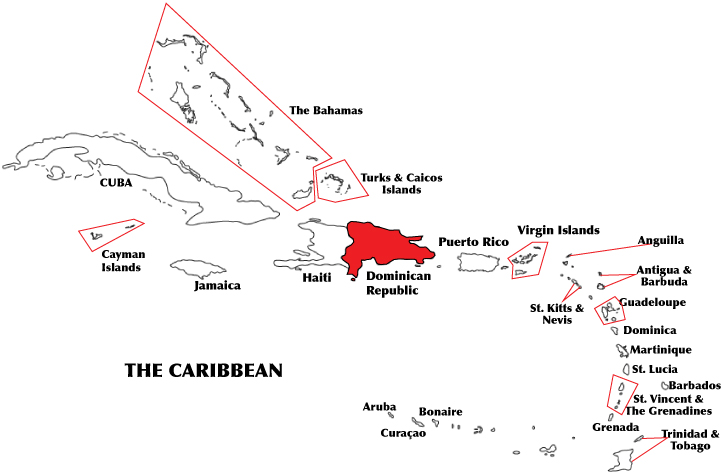
The Dominican Republic shares the island of Hispaniola with Haiti, but has a much higher standard of living. Jared Diamond offered some characteristically plausible-sounding reasons for this disparity in his 2005 book Collapse, and these ideas received a fair bit of media coverage following the Haiti earthquake in 2010. While race and human capital both played a part in those explanations, Diamond did not mention intelligence differences (having already rejected this line of thinking as “loathsome” in Guns, Germs, and Steel (1997)). However, the theoretical relevance of this variable is obvious: intelligence and achievement tests are a more direct measure of individual human capital than input variables like education. Jones and Schneider (2006) found IQ to be “the most robust human capital measure” in an expansive dataset of international comparison measures—a better predictor of economic development than variables like educational spending and enrollment.
IQ and the Wealth of Nations (2002) did not include data for either Haiti or the Dominican Republic, but Lynn’s dataset has included one study for the Dominican Republic since the publication of IQ and Global Inequality (2006).
Here I scrutinize Lynn’s use of this reference and introduce a few more small studies. The data available for the Dominican Republic is quite meager. Continue reading
Some things never change
Nearly 100 years ago George Ferguson tested the racial genetic hypothesis of IQ differences and found the following remarkable results, as reported by Baker (1974):

Just a couple of days ago, the awesome Audacious Epigone pointed out that the GSS (2012) contains a color ratings scale. GSS (2012) gives us the following results:
As an online discussion about IQ or general intelligence grows longer, the probability of someone linking to statistician Cosma Shalizi’s essay g, a Statistical Myth approaches 1. Usually the link is accompanied by an assertion to the effect that Shalizi offers a definitive refutation of the concept of general mental ability, or psychometric g.
In this post, I will show that Shalizi’s case against g appears strong only because he misstates several key facts and because he omits all the best evidence that the other side has offered in support of g. His case hinges on three clearly erroneous arguments on which I will concentrate. Continue reading
Charles Murray’s 2005 Commentary article, The Inequality Taboo, expressed the idea that the post genomic era has finally brought us a method to resolve the question of genes, race, and intelligence:
To the extent that genes play a role, IQ will vary by racial admixture. In the past, studies that have attempted to test this hypothesis have had no accurate way to measure the degree of admixture, and the results have been accordingly muddy. The recent advances in using genetic markers solve that problem. Take a large sample of racially diverse people, give them a good IQ test, and then use genetic markers to create a variable that no longer classifies people as ‘white’ or ‘black,’ but along a continuum. Analyze the variation in IQ scores according to that continuum. The results would be close to dispositive.
Murray believed such a project would only project scientific legitimacy if the participating researchers had diverse beliefs about the causes of the black-white IQ gap. But when he attempted to assemble the team, with assurances that he himself would find the funding, only the hereditarian researchers wanted to contribute to the project. So it did not happen.
Would the results of such a study really be close to dispositive? Yes and no. Continue reading
Introduction
We have shown, amongst other things, that pre-market measures of IQ substantially statistically explain the association between color and outcomes in the US. This implies that the adult color-outcome differences are substantially caused by IQ differences, rather than vice versa. To investigate this issue further, I have taken a longitudinal approach.
As background, it is well established that the year to year correlation for IQ is mediated by general intelligence on the psychometric level and by shared genes and shared environment on the causal levels. The latter two sources contribute to the longitudinal stability of IQ. Unshared environment, on the other hand, does not. This situation is illustrated in the table immediately below. As is shown, the longitudinal stability of IQ scores for both Blacks and Whites is conditioned by genetic and shared environmental effects. For the Add Health sample, in particular, unshared environment contributes only to longitudinal change.

(From: Beaver, et al. (2013). The genetic and environmental architecture to the stability of IQ: Results from two independent samples of kinship pairs. Intelligence, 41(5), 428-438.)
It follows then that if differences are due to shared genes and shared environment, as we propose, then the IQ-color association should be largely on a factor common across ages. Moreover, IQ at earlier ages should explain some of the IQ-color correlations at a latter ages. Overall, the association between color and IQ should have longitudinal stability. It is, of course, not necessary that it does. If, for example, labor marker color discrimination was leading to outcome differences which were, in turn, leading to IQ difference, the pre-market and post-market color-IQ correlations would not be mediated by a common factor. Likewise, if idiosyncratic individual factors such as peer group influences were conditioning the differences, one would not expect longitudinally stable color associated IQ differences (since such idiosyncratic influences don’t condition longitudinally stable IQ differences).
Introduction. If color-based discrimination becomes more intense at a later age, when darker-skinned individuals face discrimination in the labor market and thus depressing their economic opportunities at every level, for instance, the colorism hypothesis could have argued that IQ measured at earlier ages would not mediate the IQ-outcome relationship measured at a later age because discrimination would have conditioned later success in life.
It has come to my attention that interest in IQ-HBD is on the wane even amongst HBDers and HBDresses. Given this state of affairs, I have decided to compose this post as pithily as possible in hopes that my main points will be delivered before my few readers have fully tuned out:
Continue reading

