Page 15 of 17

Pigmentocracy: A Longitudinal Approach

Introduction

We have shown, amongst other things, that pre-market measures of IQ substantially statistically explain the association between color and outcomes in the US. This implies that the adult color-outcome differences are substantially caused by IQ differences, rather than vice versa. To investigate this issue further, I have taken a longitudinal approach.

As background, it is well established that the year to year correlation for IQ is mediated by general intelligence on the psychometric level and by shared genes and shared environment on the causal levels. The latter two sources contribute to the longitudinal stability of IQ. Unshared environment, on the other hand, does not. This situation is illustrated in the table immediately below. As is shown, the longitudinal stability of IQ scores for both Blacks and Whites is conditioned by genetic and shared environmental effects. For the Add Health sample, in particular, unshared environment contributes only to longitudinal change.

acestabilitychange

(From: Beaver, et al. (2013). The genetic and environmental architecture to the stability of IQ: Results from two independent samples of kinship pairs. Intelligence, 41(5), 428-438.)

It follows then that if differences are due to shared genes and shared environment, as we propose, then the IQ-color association should be largely on a factor common across ages. Moreover, IQ at earlier ages should explain some of the IQ-color correlations at a latter ages. Overall, the association between color and IQ should have longitudinal stability. It is, of course, not necessary that it does. If, for example, labor marker color discrimination was leading to outcome differences which were, in turn, leading to IQ difference, the pre-market and post-market color-IQ correlations would not be mediated by a common factor. Likewise, if idiosyncratic individual factors such as peer group influences were conditioning the differences, one would not expect longitudinally stable color associated IQ differences (since such idiosyncratic influences don’t condition longitudinally stable IQ differences).

Continue reading

Holes in the Colorism Hypothesis

Introduction. If color-based discrimination becomes more intense at a later age, when darker-skinned individuals face discrimination in the labor market and thus depressing their economic opportunities at every level, for instance, the colorism hypothesis could have argued that IQ measured at earlier ages would not mediate the IQ-outcome relationship measured at a later age because discrimination would have conditioned later success in life.

Continue reading

HVGIQ: The Bahamas

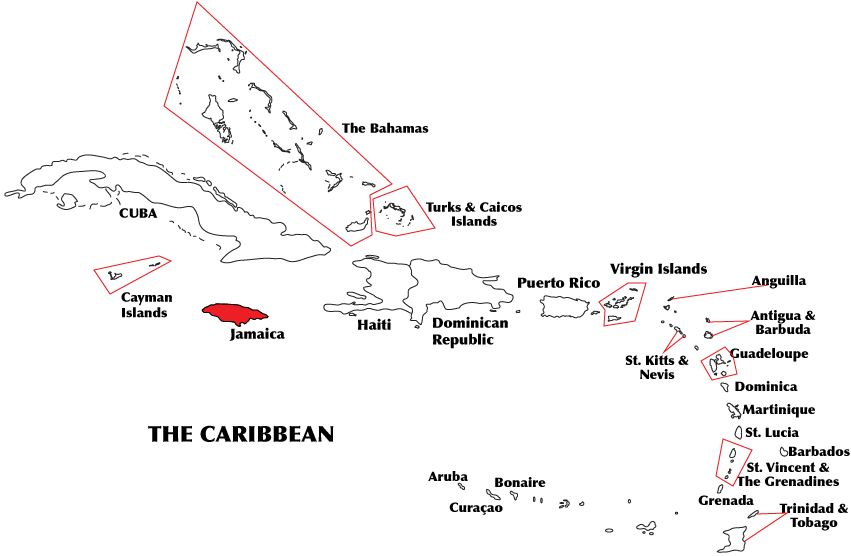
The Bahamas is one of the most prosperous nations in the world (Third highest GDP per capita in the Americas, behind the US and Canada), with an economy, much like the Cayman Islands, primarily dependent upon tourism and finance. The population, not much larger than 350,000, is 85% black, 12% white, and 3% Asian and Latin American.

IQ and the Wealth of Nations (2002) does not have a study for The Bahamas, but estimates an IQ of 78 by using the score from Barbados (p. 74). IQ and Global Inequality (2006) estimates an IQ of 84 by averaging the scores from Cuba and the Dominican Republic (p. 55), and this is the estimate still reported in the most recent book (Lynn & Vanhanen, 2012, p. 20).

Here I discuss measured IQ data for The Bahamas from two different studies. Continue reading

Color Differences: Ubiquitous Yet Understudied

Note: Our analysis has been updated and extended. Refer also to: Color Differences: Corrections and Further Analysis. Part 1

(or Colorism: Game Over)

Introduction

Following up with Dalliard’s pioneering post on colorism, we looked at the relationship between skin color, cognitive ability, and educational attainment in the full NLSY 97 sample (across all racial and ethnic groups). Our purpose was to test what we term “Strong Colorism”. According to “Strong Colorism”, color discrimination is a unifying explanation for sub-population differences in the US and beyond; it is a generalized phenomenon that can account for pigment related outcome differences. Lest readers suspect that a straw position is being constructed, below is an excerpt from an article, recently published in the journal of Industrial and Organizational Psychology, discussing this model (which the authors take to be established):
Continue reading

HVGIQ: Jamaica

IQ and the Wealth of Nations (2002) cites one study for Jamaica (Manley, 1963 ). The sample size is nearly two thousand school children, and the reported IQ is 72 (p. 209). Lynn’s various updates to that book have included five additional references. However, in another anomaly, the most recent book contains only two references, both with relatively small sample sizes, and omits the large study altogether. The IQ estimate for Jamaica has also been lowered to 67! (Lynn, 2012, p. 403)

Here I review over 20 intelligence test studies from Jamaica. I find that Lynn’s numbers were not accurately reported, and that IQ is significantly higher in Jamaica than his books have claimed. Continue reading

Colorism in America?

Previously, we established that skin color and intelligence are correlated in the NLSY97 sample as predicted by hereditarian theory. Continuing this investigation, we looked into how these variables go together within and between African American families in the same sample. In other words, we wanted to know if lighter-skinned individuals tend to be smarter than their darker-skinned siblings just as the average light-skinned black in the general population is smarter than the average dark-skinned black. Continue reading

Gildea (1992): A lost IQ study of transracially adopted Koreans

In 2005 one of my co-bloggers at Gene Expression posted an excerpt from a Wall Street Journal article asserting that large US ethnic performance differences in spelling bees were due to dubious cultural values. My response was Is it Really Bee-cause of Culture?, which argued that cultural arguments for ethnic differences (at least in their standard formulations) are empirically false. First of all, it’s one thing to argue that “correlation does not imply causation”, but most claims about, say, Asian super-parents or black anti-intellectualism don’t even rely on real correlations, but ex post facto rationalizations: Asian parents must be amazing, because look at how well their kids perform! Research has disconfirmed many of these supposed ethnocultural advantages and disadvantages. Second, behavior geneticists have looked at full siblings, half siblings, adopted siblings, etc; even where real correlations between outcomes and home variables exist (e.g., children with high IQs come from homes with more books), these correlations are demonstrably the result of shared genetic background between parents and their biological offspring, not due to the influences of home environment. Third, and this will be my primary focus here, transracial adoption research is able to test these claims even more directly. Do people from ethnic group Y, that are raised by parents from ethnic group Z, grow up to become like people from biological group Y or from cultural group Z? Again this research has not been kind to culture theory. (“Culture”, of course, could also be transmitted through other hypothetical social influences, but it is not my intention to discuss this all in great detail right now).

Shortly after writing that post, I decided that more needed to be written about transracial adoption research as a behavior genetic experiment. Arthur Jensen, Richard Lynn, and J. Philippe Rushton have all cited the Minnesota Transracial Adoption Study, as well as several IQ studies of transracially adopted Asians, in support of the hereditarian position. And Richard Nisbett has referenced several other adoption studies that suggest no racial gaps. However, I suspected there was more data for transracially adopted children than what this small cadre of scientists had already discussed (at the very least for important variables other than intelligence); research that could give us a more complete picture of what these unusual children become, and what this can tell us about the causes of ethnic differences in socially valued outcomes.

So I spent a number of months during 2006 doing research for an E-book idea (tentatively titled Race Differences & Transracial Adoption). And there were indeed a number of novel and revealing finds in that process. Unfortunately—as usual—I could not obtain all the existing research I wanted, so I never proceeded with the project. Even worse, I never shared what I had discovered with a wider audience. Human Varieties can now serve as an appropriate platform to share those discoveries.

This post heralds the grand new epoch of sharing by summarizing an unpublished doctoral dissertation on IQ and academic achievement in a sample of transracially adopted Koreans (Gildea, 1992 ). According to Google Scholar, no one has previously cited this paper. Here be dragons! Continue reading

HVGIQ: Cayman Islands

The Cayman Islands is a British Overseas Territory. In global comparison, this tiny dependency ranks near the top in standard of living and per capita GDP (currently sandwiched between the U.S., Ireland, Japan and Iceland). Lynn and Vanhanen’s books include data for Bermuda—another Overseas Territory—but do not mention the Cayman Islands.

At least one psychologist has administered intelligence tests to Cayman Islands school children (1960 Curti ), and this forgotten study is noteworthy because it is also one of the relatively rare instances where black and white IQ scores have been compared outside of the United States, Britain, and South Africa. Continue reading

« Older posts Newer posts »

© 2026 Human Varieties

Theme by Anders NorenUp ↑

Human Varieties

Stay informed with curated content and the latest headlines, all delivered straight to your inbox. Subscribe now to stay ahead and never miss a beat!

Skip to content ↓